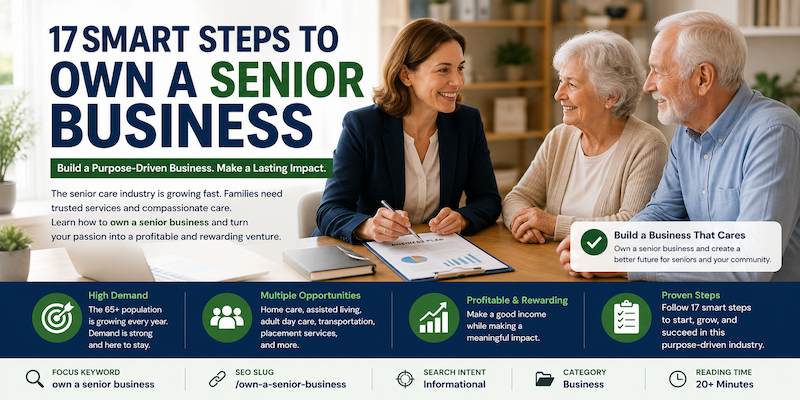
If you want to own a senior business, you are entering one of the fastest-growing industries in the world. As people live longer, the demand for senior services continues to rise. Families need trusted businesses that help older adults live safely, comfortably, and independently.
Owning a senior business is not only about making money. It is about providing care, solving problems, and improving lives. Whether you plan to buy an existing company or start from scratch, understanding the industry is the first step toward success.
This guide explains everything in simple language. You will learn what a senior business is, how to buy one, common challenges, costs, growth opportunities, and best practices.
Quick Answer
Can anyone own a senior business?
Yes. Many successful owners come from business, healthcare, finance, or customer service backgrounds. While some services require licensed staff, the owner does not always need medical qualifications. Hiring experienced professionals and following local regulations are often enough.
Table of Contents
What Does “Own a Senior Business” Mean?
To own a senior business means operating a company that provides products or services designed for older adults. These businesses help seniors stay healthy, safe, active, and independent while generating income for the owner.
Key Takeaway
✔ Growing demand because of aging populations
✔ Many business models to choose from
✔ Can provide recurring monthly revenue
✔ Requires strong customer service and trust
✔ Success depends on quality care and compliance
Why More People Want to Own a Senior Business
The senior population is growing every year. Healthcare improvements allow people to live longer, creating a greater need for support services.
For population aging statistics and research, visit the World Health Organization
Many seniors prefer staying in their own homes instead of moving into nursing facilities. Families also look for reliable businesses that can help with daily care.
This creates opportunities for entrepreneurs.
Some popular services include:
- Home care
- Transportation
- Meal delivery
- Assisted living
- Medical equipment
- Home maintenance
- Senior fitness
- Financial planning
- Technology support
- Social activities
Demand continues to increase across many countries.
Types of Senior Businesses
| Business Type | Investment | Demand | Recurring Revenue |
|---|---|---|---|
| Home Care | Medium | Very High | Yes |
| Assisted Living | High | High | Yes |
| Medical Equipment | Medium | High | Yes |
| Transportation | Low | Medium | Yes |
| Meal Delivery | Medium | High | Yes |
| Cleaning Services | Low | Medium | Yes |
| Senior Fitness | Medium | Growing | Yes |
| Technology Support | Low | Growing | Yes |
Benefits of Owning a Senior Business
There are many reasons entrepreneurs decide to own a senior business.
1. Growing Market
Every year more people reach retirement age.
This means long-term customer demand.
2. Stable Industry
Healthcare and senior services remain important even during economic downturns.
Families continue spending on care.
3. Recurring Income
Many businesses charge monthly service fees.
Examples include:
- Home care subscriptions
- Assisted living payments
- Transportation packages
- Maintenance plans
Recurring income creates predictable cash flow.
4. Positive Community Impact
Helping seniors improves quality of life.
Many owners find this work personally rewarding.
5. Expansion Opportunities
After building one location, owners often expand into nearby cities.
Franchising is also possible.
Challenges Before You Own a Senior Business
Every opportunity comes with challenges.
Understanding them helps you prepare.
Hiring Staff
Finding skilled caregivers can be difficult. Employee retention is important.
Regulations
Healthcare businesses often require licenses and inspections. Always check local laws.
Building Trust
Families expect reliable service. A single poor experience can damage your reputation.
Competition
Many regions already have established providers. Strong customer service helps you stand out.
Best Practice Box
Always focus on quality before rapid expansion. Satisfied families become your best marketing channel through referrals and online reviews.
Should You Buy or Start a Senior Business?
| Buy Existing Business | Start New Business |
|---|---|
| Existing customers | Build customer base |
| Proven systems | Full flexibility |
| Higher purchase cost | Lower startup cost |
| Faster income | Slower growth initially |
| Existing employees | Hire your own team |
Buying often reduces risk because the business already has customers.
Starting from scratch allows complete control.
Steps to Own a Senior Business
Step 1. Choose the Right Business Model
Decide what service matches your experience and budget.
Examples:
- Home healthcare
- Transportation
- Meal delivery
- Senior housing
- Consulting
Step 2. Research the Market
Study:
- Local population
- Competitors
- Pricing
- Demand
- Regulations
Look for areas where demand exceeds supply.
Step 3. Prepare Your Budget
Include costs such as:
- Business purchase
- Licenses
- Insurance
- Staff salaries
- Marketing
- Equipment
- Office expenses
Unexpected costs are common. Maintain an emergency fund.
Step 4. Secure Financing
Funding options include:
- Personal savings
- Business loans
- Investors
- SBA financing (where available)
- Seller financing
Compare interest rates carefully.
Step 5. Complete Due Diligence
If buying an existing business, review:
- Financial statements
- Tax records
- Customer contracts
- Employee agreements
- Licenses
- Legal disputes
Never skip this step.
Step 6. Build a Strong Team
Hire experienced employees.
Train them regularly.
Create clear procedures.
Happy employees often provide better customer care.
Step 7. Market Your Business
Use multiple marketing channels.
Examples include:
- Local SEO
- Google Business Profile
- Community events
- Referral partnerships
- Healthcare professionals
You can also learn marketing strategies from our guide on Performance Marketing Agency.
Real Example
Sarah worked as an accountant for fifteen years.
She wanted a business with stable demand.
Instead of opening a restaurant, she purchased a small home care company with twelve employees.
During her first year she focused on:
- Better scheduling
- Employee training
- Online reviews
- Community partnerships
Within three years, the company doubled its clients.
Most new customers came through referrals from satisfied families.
Her success came from improving operations rather than making major changes.
Best Practice Box
Measure customer satisfaction every month. Simple surveys help identify problems before families leave.
Mistakes New Owners Make
Avoid these common mistakes.
Hiring Too Quickly
Recruit carefully. Quality matters more than speed.
Ignoring Compliance
Missing licenses can lead to penalties. Stay updated with regulations.
Weak Marketing
Many owners depend only on referrals. Build an online presence early.
Poor Financial Planning
Track income and expenses monthly. Use accounting software.
Trying to Do Everything Alone
Delegate responsibilities. Strong managers help businesses grow.
Technology Can Improve Senior Businesses
Modern tools save time.
Examples include:
- Scheduling software
- Electronic records
- Video consultations
- Online payments
- Customer relationship management
- Staff communication apps
Technology improves efficiency while reducing errors.
Businesses interested in digital tools can also explore our guide on Top SaaS Tools for Startups.
Marketing Tips
Successful businesses combine traditional and digital marketing.
Focus on:
- Local SEO
- Helpful blog content
- Customer reviews
- Social media
- Educational events
- Referral partnerships
Trust is your biggest advantage.
Financial Expectations
Income depends on:
- Location
- Services
- Staff
- Pricing
- Customer retention
Some businesses become profitable within the first year.
Others require two to three years of steady growth.
Long-term planning is essential.
Future of Senior Businesses
Several trends are shaping the future.
These include:
- Home-based care
- AI scheduling
- Remote health monitoring
- Smart home technology
- Personalized wellness services
- Better transportation solutions
Businesses that adapt to changing needs are more likely to grow.
Comparison: Senior Business vs Traditional Small Business
| Feature | Senior Business | Traditional Business |
|---|---|---|
| Growing Demand | High | Depends on industry |
| Repeat Customers | High | Varies |
| Community Impact | Very High | Medium |
| Regulations | Higher | Lower |
| Long-Term Stability | High | Medium |
Frequently Asked Questions
Is owning a senior business profitable?
Yes. Many senior businesses generate recurring income because customers often require long-term services instead of one-time purchases.
Do I need healthcare experience?
Not always. Many owners hire licensed professionals while focusing on business management, marketing, customer service, and operations.
What is the easiest senior business to start?
Transportation, cleaning, companionship, technology support, and meal delivery usually require lower investment than assisted living facilities.
How much money do I need?
Startup costs vary widely depending on the business model, location, staffing, equipment, and licensing requirements.
Can I buy an existing senior business?
Yes. Buying an established company may reduce startup risk because customers, employees, and operating systems already exist.
What licenses are required?
Requirements depend on your country and business type. Always check local government regulations before starting operations.
Is demand increasing?
Yes. Aging populations continue to increase demand for healthcare, home services, transportation, and senior living support worldwide.
How do I find customers?
Use local SEO, referrals, healthcare partnerships, community organizations, social media, and positive customer reviews.
Conclusion
Choosing to own a senior business can be both financially rewarding and personally meaningful. The growing senior population creates long-term demand for trusted services, making this industry attractive for entrepreneurs willing to focus on quality and customer care.
Success comes from careful planning, strong financial management, excellent employees, and building lasting relationships with families. Whether you buy an existing business or launch a new one, always perform thorough research, understand local regulations, and invest in exceptional service.
Businesses that prioritize trust, consistency, and innovation are well positioned for long-term growth in the senior care market.