Hospitality is one of the most flexible industries for new business owners. Entrepreneurs start hospitality businesses in food service, lodging, travel, events, wellness, and technology, often with very different budgets and skill sets.
If you are wondering what types of hospitality businesses entrepreneurs start, the answer usually depends on budget, skills, location, and customer demand. This guide answers what types of hospitality businesses do entrepreneurs start in 2026, with 25 practical ideas, real comparisons, and simple steps to help you choose the right one.
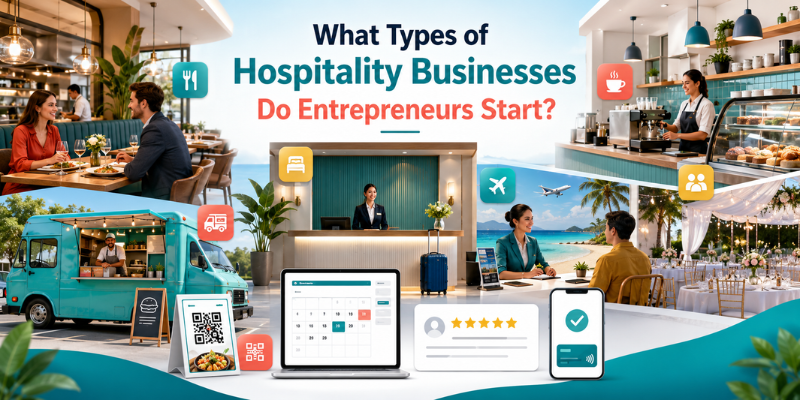
Entrepreneurs start hospitality businesses such as restaurants, cafes, food trucks, catering companies, hotels, boutique stays, bed and breakfasts, vacation rentals, travel agencies, tour services, event venues, wedding planning companies, bars, wellness centers, and hospitality technology tools.
Table of Contents
Quick Answer: What Types of Hospitality Businesses Do Entrepreneurs Start?
Entrepreneurs start hospitality businesses across six main categories: food and beverage, accommodation, travel and tourism, events and entertainment, wellness and guest services, and hospitality technology. Each category includes several practical business ideas.
- Food and beverage: restaurants, cafes, food trucks, catering, bakeries
- Accommodation: hotels, boutique hotels, bed and breakfasts, vacation rentals
- Travel and tourism: travel agencies, tour guide businesses
- Events and entertainment: event planning businesses, wedding venues
- Wellness and guest services: spas, coworking cafes
- Hospitality technology: marketing agencies, booking and review software
Quick Comparison of Hospitality Business Types
The table below compares 25 hospitality business types by category, startup cost, difficulty, and revenue potential.
| Business Type | Category | Startup Cost | Difficulty Level | Best For | Revenue Potential |
|---|---|---|---|---|---|
| Restaurant | Food and Beverage | High | Hard | Entrepreneurs with food and management experience | Medium to High |
| Cafe | Food and Beverage | Medium | Moderate | Beginners who enjoy customer service | Medium |
| Food truck | Food and Beverage | Low | Moderate | Beginners with cooking skills | Medium |
| Catering business | Food and Beverage | Low to Medium | Moderate | People with event and food skills | Medium to High |
| Cloud kitchen | Food and Beverage | Medium | Moderate | Entrepreneurs focused on delivery | Medium to High |
| Bakery | Food and Beverage | Medium | Moderate | People with baking skills | Medium |
| Hotel | Accommodation | Very high | Hard | Experienced investors | High |
| Boutique hotel | Accommodation | High | Hard | Entrepreneurs with design and hospitality background | High |
| Bed and breakfast | Accommodation | Medium | Moderate | People with a spare property | Medium |
| Vacation rental | Accommodation | Low to Medium (varies by location) | Easy to Moderate | People with property access | Medium to High |
| Event planning business | Events | Low | Moderate | Organized, detail oriented people | Medium to High |
| Wedding venue | Events | Very high | Hard | Investors with property | High |
| Travel agency | Travel and Tourism | Low to Medium | Moderate | People who love travel planning | Medium |
| Tour guide business | Travel and Tourism | Low | Easy | People with local knowledge | Low to Medium |
| Hostel | Accommodation | Medium | Moderate | Entrepreneurs targeting budget travelers | Medium |
| Resort | Accommodation | Very high | Hard | Large scale investors | High |
| Bar or lounge | Food and Beverage | High | Hard | Entrepreneurs with hospitality experience | Medium to High |
| Juice bar | Food and Beverage | Low to Medium | Moderate | Health focused entrepreneurs | Medium |
| Ice cream shop | Food and Beverage | Medium | Moderate | Family friendly business owners | Medium |
| Meal prep service | Food and Beverage | Low | Easy to Moderate | People with cooking and nutrition skills | Medium |
| Corporate dining service | Food and Beverage | Medium to High | Moderate | Experienced food service operators | Medium to High |
| Spa and wellness center | Wellness | High | Hard | Wellness professionals | Medium to High |
| Coworking cafe | Guest Services | Medium | Moderate | Entrepreneurs blending workspace and cafe ideas | Medium |
| Restaurant marketing agency | Hospitality Technology | Low | Moderate | Marketing skilled entrepreneurs | Medium to High |
| Hospitality SaaS or tech tool | Hospitality Technology | Medium to High | Hard | Tech skilled entrepreneurs | High |
What Is a Hospitality Business?
A hospitality business is a company that serves customers through food, lodging, travel, events, leisure, comfort, or guest experience. The goal is to make guests feel welcome, comfortable, and well cared for.
Customer experience sits at the center of hospitality. A guest’s stay, meal, or event experience shapes whether they return or recommend the business to others.
Hospitality businesses can be small, like a single food truck, or large, like a resort with hundreds of rooms. The industry covers many business models, but the focus on guest experience stays the same.
25 Types of Hospitality Businesses Entrepreneurs Can Start
Here is a closer look at 25 hospitality business ideas, including what each one involves, who it suits, and how it can grow. Many beginners ask what types of hospitality businesses do entrepreneurs start with low investment. Common options include food trucks, catering, tour guide services, meal prep businesses, and small event planning services.
Restaurant
A restaurant is a business that prepares and serves meals to guests in a dining space.
- What it is: A full service or casual dining business that cooks and serves food on site
- Who it is best for: Entrepreneurs with cooking, management, or food service experience
- Main startup needs: A location, kitchen equipment, staff, licenses, and a menu
- Possible challenges: High startup cost, staff turnover, and rent pressure
- Growth opportunity: Repeat customers, catering add ons, and strong local reviews
Cafe or Coffee Shop
A cafe is a smaller food and beverage business that focuses on coffee, drinks, and light meals.
- What it is: A casual space serving coffee, tea, and simple food items
- Who it is best for: Beginners who enjoy customer service and a simple menu
- Main startup needs: A location, coffee equipment, seating, and basic staff
- Possible challenges: Competition from other cafes and thin margins on drinks
- Growth opportunity: Loyalty programs, pastries, and a strong local following
Food Truck
A food truck is a mobile food business that serves meals from a vehicle instead of a fixed location.
- What it is: A mobile kitchen that sells food at different locations or events
- Who it is best for: Beginners with cooking skills and a lower starting budget
- Main startup needs: A truck or trailer, kitchen equipment, and permits
- Possible challenges: Limited space, weather issues, and finding good locations
- Growth opportunity: Event bookings, social media buzz, and a second truck
Catering Business
A catering business prepares and serves food for events instead of a fixed dining space.
- What it is: A food service business built around events, parties, and gatherings
- Who it is best for: People with strong cooking skills and event coordination ability
- Main startup needs: Kitchen access, transport, and serving equipment
- Possible challenges: Inconsistent bookings and demanding event schedules
- Growth opportunity: Corporate contracts, weddings, and repeat event clients
Cloud Kitchen
A cloud kitchen is a delivery only food business with no dine in seating.
- What it is: A kitchen built for delivery orders through apps or a website
- Who it is best for: Entrepreneurs focused on delivery rather than dine in service
- Main startup needs: Kitchen space, delivery app partnerships, and packaging
- Possible challenges: Delivery app fees and dependence on online ordering
- Growth opportunity: Multiple food brands run from one kitchen
Bakery
A bakery is a business that makes and sells bread, pastries, cakes, and baked goods.
- What it is: A food business centered on baked items, either retail or custom orders
- Who it is best for: People with baking skills and attention to detail
- Main startup needs: An oven, kitchen space, and a display or storefront
- Possible challenges: Early morning hours and short shelf life of products
- Growth opportunity: Custom cakes, wholesale orders, and online sales
Hotel
A hotel is an accommodation business that offers rooms and guest services for travelers.
- What it is: A property offering rooms, amenities, and guest services
- Who it is best for: Experienced investors with access to significant capital
- Main startup needs: Property, staff, licenses, and booking systems
- Possible challenges: Very high startup cost and ongoing operating expenses
- Growth opportunity: Repeat guests, group bookings, and seasonal pricing
Boutique Hotel
A boutique hotel is a smaller, uniquely designed hotel that focuses on a distinct guest experience.
- What it is: A small scale hotel with a unique theme, design, or local character
- Who it is best for: Entrepreneurs with design sense and hospitality experience
- Main startup needs: Property, renovation, design, and a small trained team
- Possible challenges: High renovation costs and a smaller room count for revenue
- Growth opportunity: Premium pricing and strong word of mouth from unique stays
Bed and Breakfast
A bed and breakfast is a small lodging business, often run from a home, that includes breakfast for guests.
- What it is: A small guest house offering rooms and breakfast
- Who it is best for: People who already own a suitable property
- Main startup needs: A spare property, guest furnishings, and basic licensing
- Possible challenges: Limited room count and hands on daily involvement
- Growth opportunity: Strong reviews and repeat leisure travelers
Vacation Rental
A vacation rental is a property rented out short term to travelers, often through an online platform.
- What it is: A short term rental property listed for travelers and guests
- Who it is best for: People with access to a spare or investment property
- Main startup needs: Furnishing, cleaning services, and listing on rental platforms
- Possible challenges: Local rental rules and seasonal demand changes
- Growth opportunity: Multiple listings and strong guest reviews
Event Planning Business
An event planning business organizes weddings, parties, and corporate events for clients.
- What it is: A service business that plans and coordinates events for clients
- Who it is best for: Organized, detail oriented people who enjoy coordination
- Main startup needs: A portfolio, vendor contacts, and planning software
- Possible challenges: Inconsistent bookings and demanding client expectations
- Growth opportunity: Referrals, repeat corporate clients, and larger events
Wedding Venue
A wedding venue is a property built or set up to host weddings and related events.
- What it is: A dedicated space rented out for weddings and celebrations
- Who it is best for: Investors with suitable property and event experience
- Main startup needs: Property, permits, and event infrastructure
- Possible challenges: High upfront investment and seasonal booking patterns
- Growth opportunity: Premium packages and partnerships with vendors
Travel Agency
A travel agency helps customers plan and book trips, flights, and accommodation.
- What it is: A service business that plans travel and books trips for clients
- Who it is best for: People who enjoy travel planning and building client trust
- Main startup needs: Booking systems, supplier relationships, and marketing
- Possible challenges: Competition from online booking platforms
- Growth opportunity: Niche travel packages and repeat client bookings
Tour Guide Business
A tour guide business offers guided experiences of a city, region, or attraction.
- What it is: A service business that leads guided tours for visitors
- Who it is best for: People with strong local knowledge and people skills
- Main startup needs: Local licensing, marketing, and basic transport
- Possible challenges: Seasonal demand and dependence on tourist traffic
- Growth opportunity: Online bookings and partnerships with hotels
Hostel
A hostel is a budget accommodation business that often offers shared rooms for travelers.
- What it is: A low cost lodging option, often with shared or private rooms
- Who it is best for: Entrepreneurs targeting budget and young travelers
- Main startup needs: Property, bunk furnishings, and basic staff
- Possible challenges: Lower per room revenue than hotels
- Growth opportunity: High occupancy through budget travel demand
Resort
A resort is a large accommodation business that offers rooms plus leisure amenities like pools or spas.
- What it is: A large property combining lodging with leisure facilities
- Who it is best for: Large scale investors with significant capital
- Main startup needs: Land, construction, amenities, and a full staff team
- Possible challenges: Very high startup cost and long development timelines
- Growth opportunity: Premium pricing and long guest stays
Bar or Lounge
A bar or lounge is a hospitality business that serves drinks in a social setting.
- What it is: A venue focused on drinks, atmosphere, and social experience
- Who it is best for: Entrepreneurs with hospitality and service experience
- Main startup needs: A location, liquor licenses, and trained staff
- Possible challenges: Licensing requirements and late operating hours
- Growth opportunity: Events, themed nights, and repeat regulars
Juice Bar
A juice bar is a small food and beverage business focused on fresh juices and healthy drinks.
- What it is: A counter style shop selling juices, smoothies, and healthy snacks
- Who it is best for: Health focused entrepreneurs targeting wellness customers
- Main startup needs: Juicing equipment, a small space, and fresh ingredients
- Possible challenges: Ingredient costs and short shelf life of products
- Growth opportunity: Subscription orders and health focused partnerships
Ice Cream Shop
An ice cream shop is a food business that sells ice cream and frozen desserts.
- What it is: A retail shop selling ice cream, cones, and frozen treats
- Who it is best for: Family friendly business owners in high foot traffic areas
- Main startup needs: Freezers, a storefront, and supplier relationships
- Possible challenges: Seasonal demand changes
- Growth opportunity: Catering, events, and strong summer sales
Meal Prep Service
A meal prep service prepares ready to eat meals for customers on a weekly or subscription basis.
- What it is: A food business that delivers pre cooked meals to customers
- Who it is best for: People with cooking and basic nutrition knowledge
- Main startup needs: A kitchen, packaging, and a delivery method
- Possible challenges: Consistent scheduling and ingredient sourcing
- Growth opportunity: Subscription plans and corporate wellness partnerships
Corporate Dining Service
A corporate dining service provides food service for offices, campuses, or company events.
- What it is: A food service business built around workplace dining
- Who it is best for: Experienced food service operators with contract experience
- Main startup needs: Kitchen capacity, staff, and contract relationships
- Possible challenges: Long sales cycles for corporate contracts
- Growth opportunity: Long term contracts and multi site expansion
Spa and Wellness Center
A spa and wellness center offers services like massages, facials, and relaxation treatments.
- What it is: A wellness business offering guest treatments and relaxation services
- Who it is best for: Licensed wellness professionals or investors in wellness
- Main startup needs: A location, licensed staff, and treatment equipment
- Possible challenges: Licensing requirements and staff training costs
- Growth opportunity: Membership packages and repeat client visits
Coworking Cafe
A coworking cafe combines a cafe setting with workspace features for remote workers.
- What it is: A hybrid space offering coffee, seating, and work friendly amenities
- Who it is best for: Entrepreneurs blending hospitality and workspace ideas
- Main startup needs: A location, WiFi, seating, and cafe equipment
- Possible challenges: Balancing cafe turnover with long term seating guests
- Growth opportunity: Membership plans and steady daytime traffic
Restaurant Marketing Agency
A restaurant marketing agency helps food and hospitality businesses with advertising, social media, and reviews.
- What it is: A service business that markets restaurants, cafes, and hotels
- Who it is best for: Marketing skilled entrepreneurs who understand hospitality
- Main startup needs: Marketing skills, software tools, and client relationships
- Possible challenges: Proving results and standing out from competitors
- Growth opportunity: Recurring client contracts and referral growth
Hospitality SaaS or Tech Tool
A hospitality SaaS business builds software tools that help hospitality businesses run more smoothly.
- What it is: A technology business that builds booking, review, or guest tools
- Who it is best for: Tech skilled entrepreneurs who understand hospitality needs
- Main startup needs: Development skills or a technical team, plus hosting and support
- Possible challenges: Development cost and competing with established tools
- Growth opportunity: Subscription revenue and scaling across many hospitality clients
Best Hospitality Businesses for Beginners
The best answer to the question of which types of hospitality businesses entrepreneurs start is not a single business idea, but the one that fits their skills, budget, and market demand. Beginners usually do better with hospitality businesses that have lower startup costs and simpler daily operations.
- Food truck: lower startup cost than a full restaurant
- Cafe: simple menu and manageable daily operations
- Catering: can start small with home based orders
- Vacation rental: works well if you already own a property
- Tour guide business: low cost and based on local knowledge
- Meal prep service: flexible hours and a small starting menu
- Cloud kitchen: no dine in space needed to get started
- Small event planning business: can start with a laptop and a portfolio
These options let new entrepreneurs test their idea, learn hospitality basics, and grow gradually without taking on too much risk early on.
Low Cost Hospitality Business Ideas
Some hospitality businesses can start with a small budget and grow over time.
- Food delivery kitchen with a limited menu
- Home based catering for small events
- Tour guide business using local knowledge
- Small bakery run from a licensed home kitchen
- Meal prep service for local clients
- Event planning with minimal equipment needs
- Travel consulting for personalized trip planning
- Restaurant marketing service for local food businesses
The safest way to start small is to test demand with a limited offer before investing in a full location, large equipment, or a big team.
Most Profitable Hospitality Business Types
Some hospitality businesses tend to offer stronger profit potential, though results always depend on execution.
- Hotels and boutique hotels with steady occupancy
- Wedding venues with premium event packages
- Catering businesses with repeat corporate clients
- Cloud kitchens with efficient delivery operations
- Bars with strong local demand
- Resorts with high guest spending
- Corporate dining with long term contracts
- Hospitality SaaS tools with recurring subscriptions
Profit depends on location, pricing, customer demand, cost control, and repeat customers. A smaller business with strong repeat customers can outperform a larger one with poor cost control.
Tools Hospitality Entrepreneurs Need
Most hospitality businesses rely on a small set of digital tools to run smoothly and stay competitive.
- QR menus for contactless, easy to update menus
- Booking tools for rooms, tables, or event slots
- Review management software to collect and respond to feedback
- POS systems for fast, accurate payments
- Website builders for a simple online presence
- Email marketing tools for offers and updates
- Social media tools for scheduling posts
- Customer feedback tools to spot problems early
- Payment systems that support cards and digital wallets
Hospitality businesses can use a QR code to connect guests with menus, booking pages, feedback forms, WiFi access, offers, and review pages. This works well for restaurants, hotels, cafes, and event check ins, since one QR code can point to several useful links at once. For a deeper comparison of QR tools, read our guide on the top dynamic QR code generator options for businesses, marketers, and startups.
Why Reviews Matter for Hospitality Businesses
Guests often check Google reviews, ratings, photos, and comments before choosing a restaurant, hotel, cafe, spa, or event venue. A strong review profile can be the deciding factor between two similar businesses.
Reviews affect trust, bookings, foot traffic, and local search visibility. A steady flow of recent, positive reviews signals to both guests and search engines that a business is active and reliable.
GetMoreReview helps restaurants, cafes, hotels, salons, spas, and other hospitality businesses collect feedback, send review requests, route unhappy customers to private feedback, and improve customer trust from one simple dashboard. Founders can try to ask for a review right after a guest checks out or finishes a meal.
Customer reviews can strongly affect hospitality businesses because guests often check ratings before booking or visiting. For a broader comparison of tools that support reviews, brand trust, and reputation protection, read our guide to the best online reputation management companies.
Hospitality Business Startup Cost Table
Startup costs vary by city, rent, staff, equipment, and license requirements. The table below gives general cost levels rather than exact figures.
| Business Type | Typical Startup Cost Level | Main Costs | Best Way to Start Small | Risk Level |
|---|---|---|---|---|
| Cafe | Medium | Rent, equipment, staff, licenses | Start with a small counter or kiosk format | Medium |
| Food truck | Low | Truck or trailer, kitchen equipment, permits | Start part time at local events | Medium |
| Restaurant | High | Rent, kitchen build out, staff, licenses | Start with a small menu and limited seating | High |
| Catering | Low to Medium | Kitchen access, equipment, transport | Start with home based orders for small events | Medium |
| Cloud kitchen | Medium | Kitchen space, delivery partnerships, equipment | Start with one or two menu items | Medium |
| Vacation rental | Low to Medium | Property setup, furnishing, cleaning | Start with one property before expanding | Medium |
| Tour guide business | Low | Licensing, marketing, transport | Start with weekend tours in one area | Low |
| Boutique hotel | High | Property, renovation, staff, licenses | Start with a small number of rooms | High |
| Event planning | Low | Marketing, portfolio building, software | Start with small local events | Medium |
| Hospitality SaaS | Medium to High | Development, hosting, support, marketing | Start with one core feature for a niche audience | High |
Business Growth and Profit Factors
Several factors influence how well a hospitality business grows and earns profit over time.
| Factor | Why It Matters | Hospitality Example | Business Impact |
|---|---|---|---|
| Location | Foot traffic and convenience drive visits | A cafe near an office park gets steady daily customers | More consistent revenue |
| Customer experience | Guests remember how they were treated | A hotel with friendly staff earns repeat bookings | Higher retention and referrals |
| Online reviews | Guests check ratings before booking or visiting | A restaurant with strong reviews attracts new diners | More trust and bookings |
| Repeat customers | Returning guests cost less to serve than new ones | A spa with loyal clients has predictable income | Lower marketing cost |
| Menu or service quality | Quality affects satisfaction and word of mouth | A bakery with consistent taste builds a loyal base | Stronger brand reputation |
| Staff training | Trained staff handle guests and problems better | A hotel team that resolves issues fast keeps guests happy | Fewer complaints, better reviews |
| Local SEO | Guests search for nearby options online | A cafe showing up in local search gets more walk ins | More discovery and traffic |
| Social media visibility | Guests discover businesses through photos and posts | A food truck posting daily locations builds a following | More awareness and reach |
| Cost control | Managing expenses protects profit margins | A restaurant tracking food waste improves margins | Higher net profit |
| Booking convenience | Easy booking reduces lost customers | A venue with simple online booking gets more inquiries | More completed bookings |
How to Choose the Right Hospitality Business
Choosing the right hospitality business is easier when you follow a clear, step by step process.
- Step 1: Choose your hospitality category. Decide between food service, lodging, travel, events, wellness, or hospitality technology.
- Step 2: Study local demand. Check what guests in your area already search for, book, or complain about.
- Step 3: Check startup cost and legal requirements. Look into licenses, permits, and rough budget needs before committing.
- Step 4: Choose a simple business model. Start with a model you can manage without a large team.
- Step 5: Test with a small launch. Try a limited menu, a single property, or a small event list first.
- Step 6: Build your online presence. Set up a simple website, social profiles, and a Google Business Profile.
- Step 7: Collect reviews and feedback. Ask guests for feedback early so you can fix problems quickly.
- Step 8: Improve operations before scaling. Fix service gaps and cost issues before opening a second location or offering.
Common Mistakes New Hospitality Entrepreneurs Make
- Starting too big before testing demand
- Ignoring location research
- Underestimating staff and rent costs
- Not checking required licenses
- Poor customer service in the early stages
- No review strategy to build trust
- Weak online presence and low visibility
- No cost control on food, supplies, or staffing
- No plan for turning first time guests into repeat customers
Which Hospitality Business Should You Start First?
Beginners should start with a business that matches their budget, skills, location, and customer demand. There is no single correct answer to what types of hospitality businesses do entrepreneurs start first, since the right fit depends on personal strengths.
- People with food skills may start catering, a food truck, or a cloud kitchen
- People with property access may start vacation rentals or bed and breakfasts
- People with local tourism knowledge may start tours or travel services
- People with marketing or software skills may start a hospitality tech or marketing business
Matching your first hospitality business to your existing strengths lowers risk and makes it easier to deliver a good guest experience from day one.
FAQs
What are the main types of hospitality businesses?
The main types of hospitality businesses include food and beverage businesses, accommodation businesses, travel and tourism businesses, event businesses, wellness businesses, and hospitality technology tools. Each type serves guests through comfort, service, or experience.
What types of hospitality businesses do entrepreneurs start?
Entrepreneurs start hospitality businesses such as restaurants, cafes, food trucks, catering companies, hotels, bed and breakfasts, vacation rentals, travel agencies, event venues, and hospitality technology tools. The right choice depends on budget, skills, and local demand.
What is the best hospitality business for beginners?
Food trucks, cafes, catering, and tour guide businesses are common starting points for beginners. These options usually need lower startup costs and simpler operations than hotels or resorts.
What is the most profitable hospitality business?
Hotels, boutique hotels, wedding venues, and hospitality SaaS tools tend to have strong profit potential. Profit still depends on location, pricing, demand, and how well costs are managed.
Can I start a hospitality business with low investment?
Yes. Options like a food truck, home based catering, meal prep service, or tour guide business can start with a low investment. Costs still vary based on location, licenses, and equipment needs.
Is a cafe a hospitality business?
Yes. A cafe is a hospitality business because it serves food and drinks and focuses on customer comfort and experience. Cafes fall under the food and beverage category of hospitality.
Is a food truck part of the hospitality industry?
Yes. A food truck is part of the hospitality industry because it prepares and serves food directly to customers. It follows many of the same service standards as restaurants.
What tools do hospitality businesses need?
Hospitality businesses often need booking tools, POS systems, QR menus, review management software, and marketing tools. These tools help manage guests, payments, and reputation.
How do hospitality businesses get more customers?
Hospitality businesses get more customers through good location choices, strong online reviews, consistent service quality, and visible social media presence. Repeat customers and referrals also play a big role.
Is hospitality a good business to start?
Hospitality can be a good business to start for people who enjoy serving customers and managing guest experiences. Success depends on planning, location, budget, and consistent service quality.
Conclusion
So, what types of hospitality businesses do entrepreneurs start? The answer covers a wide range, from restaurants and cafes to hotels, travel services, event venues, and hospitality technology tools.
The best hospitality business for you depends on your budget, location, skills, customer demand, and growth goals. No single idea fits every entrepreneur.
Start small, test demand, collect customer feedback, and improve your service before scaling. This approach lowers risk and gives your hospitality business a stronger foundation for long-term growth.