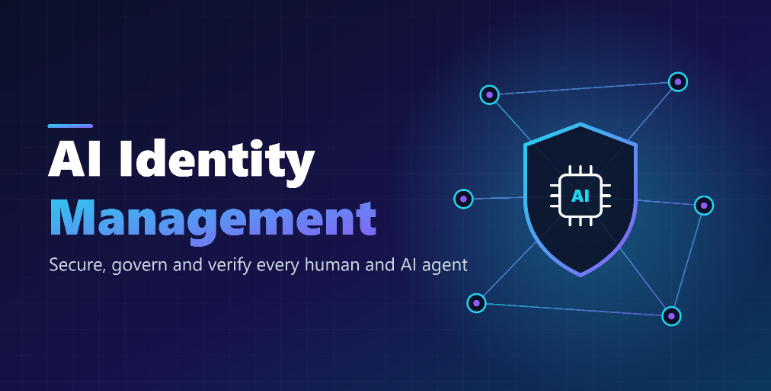
AI Identity Management is transforming how businesses protect digital identities and manage access to sensitive information. By combining artificial intelligence with modern security systems, organizations can verify users, monitor suspicious activities, and reduce unauthorized access. Unlike traditional methods, AI-powered identity verification analyzes user behavior and identifies unusual login patterns.
These capabilities improve identity and access management, strengthen digital identity protection, and support faster security decisions. Businesses can also use behavioral analytics and automated authentication to simplify account management and improve user experiences. As cyber threats continue to evolve, AI Identity Management offers organizations a smarter approach to protecting digital resources while maintaining efficient and reliable access controls.
Table of Contents
What Is AI Identity Management?
AI Identity Management refers to using artificial intelligence to manage digital identities, authenticate users, control access, and monitor identity-related activities.
It combines traditional identity and access management systems with technologies such as machine learning, behavioral analytics, and automated threat detection.
Traditional identity systems often depend on predefined rules, passwords, and administrator decisions. AI-powered solutions can analyze additional information, including login locations, device characteristics, access frequency, and user behavior.
For example, when an employee usually accesses company applications from one location but suddenly attempts to log in from an unfamiliar country, an intelligent security system may identify the activity as unusual.
Depending on its configuration, the platform can request additional verification, restrict access, or alert security administrators.
The main objective is to make identity management more efficient while reducing unauthorized access and security risks.
How Does AI Identity Management Work?
AI identity management works by collecting identity-related information, analyzing activity, and making decisions based on security policies and detected patterns.
Although individual platforms operate differently, most follow several common stages.
1. Identity Data Collection
The system collects information associated with users, devices, applications, and authentication activities.
This information may include login history, IP addresses, device details, access requests, and account activity.
Organizations must collect only appropriate information and follow applicable privacy regulations.
2. AI-Based Identity Analysis
Machine learning models analyze collected information to identify normal and unusual behavior.
The system may recognize typical login times, commonly used devices, regular application access, and other activity patterns.
These patterns help establish a baseline for identifying potentially suspicious events.
3. Identity Verification
When someone requests access, the system evaluates available authentication signals.
Depending on the organization’s policies, it may use passwords, biometric verification, multi-factor authentication, device recognition, or other identity checks.
AI can help determine when additional verification is necessary.
4. Access Control Decisions
After evaluating the available information, the system applies predefined access policies.
A trusted user may receive normal access, while a suspicious login attempt may trigger additional authentication or temporary restrictions.
High-risk actions can also require administrator approval.
5. Continuous Monitoring
Identity management does not end after a successful login.
AI-powered systems can continue monitoring account activities, access requests, and unusual behavior throughout a session.
This approach helps organizations identify compromised accounts and suspicious activities more quickly.
Key Components of AI Identity Management
An effective identity management system combines multiple technologies to protect digital accounts and control access. Each component addresses a different part of the identity security process.
Artificial Intelligence and Machine Learning
Machine learning allows identity platforms to recognize patterns and identify unusual activities. Instead of relying entirely on fixed security rules, these systems can analyze changing user behavior.
For example, an employee accessing an application at an unusual time may trigger a risk assessment. The system can consider other signals before deciding whether additional verification is necessary.
Biometric Authentication
Biometric authentication uses unique physical or behavioral characteristics to verify a person’s identity.
Common examples include facial recognition, fingerprint scanning, and voice recognition. AI can help analyze biometric information and identify possible mismatches.
However, biometric systems require strong privacy protections and safeguards against spoofing attacks.
Behavioral Analytics
Behavioral analytics examines how users interact with digital systems. It may consider login frequency, typing patterns, device usage, and application access.
These signals help identify suspicious account activities that traditional authentication methods might overlook.
Multi-Factor Authentication
Multi-factor authentication (MFA) requires users to provide multiple forms of verification before accessing protected resources.
AI can support adaptive authentication by evaluating risk signals and determining when additional verification is appropriate.
For example, a familiar device may require standard authentication, while an unfamiliar device may trigger an additional security check.
Automated Access Management
Automation helps organizations manage user permissions, account updates, and access requests.
When an employee changes departments or leaves an organization, automated workflows can help update or revoke their permissions according to company policies.
Benefits of AI Identity Management
AI-powered identity solutions provide several advantages for modern organizations. They improve security operations while helping businesses manage increasingly complex digital environments.
1. Stronger Identity Security
One major benefit is improved protection against unauthorized account access.
AI systems can analyze authentication activities and identify suspicious patterns. This helps security teams investigate potential threats before they cause significant damage.
Combined with MFA and strong access policies, intelligent identity management can create additional security layers.
2. Faster Threat Detection
Traditional identity systems may depend heavily on predefined security rules. These rules can miss unfamiliar attack patterns.
AI-based monitoring can identify unusual login behavior, suspicious access requests, and potentially compromised accounts.
Faster detection gives security teams more time to investigate and respond.
3. Reduced Manual Work
Managing thousands of employee accounts manually requires significant administrative effort.
AI-powered automation can simplify repetitive activities such as access reviews, account provisioning, and identity verification workflows.
This allows IT teams to focus on more important security responsibilities.
4. Better User Experience
Security should protect users without making everyday work unnecessarily difficult.
Adaptive authentication can help reduce unnecessary verification requests when login activities appear consistent with established patterns.
Users can access approved applications more conveniently while additional checks remain available for suspicious situations.
5. Improved Regulatory Compliance
Many organizations must follow strict requirements for data protection, access management, and identity security.
AI identity platforms can support compliance through activity monitoring, access records, and automated reporting.
However, using AI does not automatically make an organization compliant. Businesses must still follow applicable legal requirements and maintain appropriate governance procedures.
6. Scalable Identity Management
Growing organizations often manage employees, contractors, customers, partners, and third-party service providers.
AI-powered systems can help manage these identities across multiple applications and environments.
This makes identity administration easier as businesses expand their digital operations.
Common Applications of AI Identity Management
AI identity management supports different industries and business operations. Its applications depend on organizational requirements, security policies, and available technology.
Banking and Financial Services
Financial institutions manage sensitive customer information and high-value transactions. Unauthorized access can create serious financial and reputational damage.
AI identity systems can help banks analyze login behavior, detect suspicious account access, and strengthen customer verification.
They can also support fraud detection by identifying unusual authentication patterns.
Healthcare Organizations
Hospitals and healthcare providers manage sensitive patient information across multiple digital platforms.
AI identity management can help control access to electronic health records, medical applications, and administrative systems.
For example, employees can receive permissions based on their professional responsibilities.
This helps protect patient information while supporting secure access for authorized healthcare workers.
E-Commerce Businesses
Online shopping platforms handle customer accounts, payment information, order histories, and personal details.
AI-powered identity verification can help detect suspicious account access and potentially fraudulent login attempts.
E-commerce businesses can also use automated identity checks during account creation and sensitive account changes.
Educational Institutions
Schools, colleges, and universities manage digital identities for students, teachers, administrators, and external users.
AI identity management can help control access to learning platforms, examination systems, and institutional databases.
Automated account management also makes it easier to update permissions when students graduate or employees change positions.
Corporate IT Environments
Businesses use multiple applications for communication, finance, project management, and document storage.
AI-powered identity solutions help IT departments manage access across these environments.
They can support employee onboarding, role changes, account monitoring, and access removal.
AI Identity Management vs. Traditional Identity Management
Traditional identity management and AI-powered identity management share the same basic objective: ensuring that the right people access the right resources.
However, their approaches differ.
Traditional systems generally depend on predefined policies, passwords, administrator approvals, and fixed authentication requirements.
AI-powered solutions add intelligent analysis, behavioral monitoring, and automated risk assessment.
| Feature | Traditional Identity Management | AI Identity Management |
| Authentication | Fixed authentication rules | Adaptive authentication support |
| Monitoring | Rule-based monitoring | AI-assisted behavioral analysis |
| Threat detection | Known patterns and alerts | Pattern recognition and anomaly detection |
| Automation | Limited or predefined workflows | Intelligent workflow assistance |
| Access decisions | Policy-based | Policy-based with risk analysis |
| Scalability | Depends on system design | Automation can support larger environments |
AI does not eliminate the need for traditional identity controls. Instead, it adds analytical capabilities that can make existing security processes more responsive.
Organizations should combine AI with established security practices rather than treating it as a complete replacement.
Challenges and Risks of AI Identity Management
Despite its advantages, AI identity management introduces several technical and operational challenges.
Businesses should understand these limitations before implementing an intelligent identity platform.
Data Privacy Concerns
AI identity systems may process sensitive information, including biometric data, login records, device information, and behavioral patterns.
Poor data handling can create privacy risks.
Organizations should establish clear data collection policies, restrict unnecessary access, and apply appropriate encryption and retention controls.
False Positives and False Negatives
AI systems can sometimes identify legitimate activities as suspicious. These mistakes are known as false positives.
They can also fail to recognize actual threats, resulting in false negatives.
Both situations can create problems. Excessive security alerts interrupt users, while missed threats can expose sensitive resources.
Regular testing and model evaluation help reduce these risks.
Algorithmic Bias
AI systems may produce inaccurate results when their training data does not adequately represent different user groups.
For example, biometric recognition systems may perform differently across demographic groups.
Organizations should evaluate model accuracy, test for bias, and provide alternative verification methods when appropriate.
Integration Difficulties
Many businesses already use legacy applications, cloud platforms, and separate authentication systems.
Connecting these technologies with AI-powered identity solutions can require significant technical work.
Compatibility, data synchronization, and access policy management should be evaluated before implementation.
High Implementation Costs
Advanced identity platforms may require investment in software licenses, infrastructure, integration, training, and ongoing maintenance.
Smaller organizations may find these expenses challenging.
A phased implementation can help businesses prioritize essential security requirements before expanding their systems.
Best Practices for Implementing AI Identity Management
Successful implementation requires more than purchasing an AI-powered security platform. Organizations need clear policies, appropriate technology, and continuous oversight.
Start With an Identity Security Assessment
Review existing authentication systems, user accounts, access permissions, and security weaknesses.
Identify areas where manual processes create unnecessary risks or administrative difficulties.
This assessment helps determine which AI capabilities would provide meaningful improvements.
Apply the Principle of Least Privilege
Users should receive only the permissions necessary to perform their responsibilities.
For example, a marketing employee generally does not need administrative access to financial systems.
Limiting permissions reduces the potential damage caused by compromised accounts.
Implement Zero Trust Security
Zero Trust follows the principle of never automatically trusting a user or device simply because it has accessed a network before.
Every access request should be evaluated according to identity, device condition, resource sensitivity, and applicable security policies.
AI can support this approach through continuous risk analysis.
Protect Sensitive Identity Data
Organizations should protect personal and biometric information using encryption, access restrictions, and secure storage practices.
They should also establish clear retention periods and procedures for handling sensitive identity records.
Monitor AI Performance
AI systems require ongoing evaluation.
Security teams should review detection accuracy, investigate false alerts, test authentication workflows, and update models when necessary.
Human oversight remains important for high-impact access decisions.
Train Employees
Employees should understand secure authentication practices, phishing risks, and the importance of protecting their accounts.
Regular training helps users recognize suspicious requests and report potential security incidents.
How to Choose the Right AI Identity Management Software
Selecting an appropriate identity management platform requires careful evaluation. Different businesses have different security requirements, budgets, and technical environments.
Security Features
Look for essential capabilities such as multi-factor authentication, suspicious activity detection, role-based access control, and automated account management.
The platform should support your organization’s existing security policies.
Integration Capabilities
Check whether the software integrates with your existing applications, cloud services, employee directories, and authentication systems.
Good integration reduces administrative complexity and improves identity management across different environments.
Scalability and Flexibility
Choose a solution that can support your organization’s future growth.
Consider whether it can manage additional users, applications, devices, and business locations without requiring a complete system replacement.
Reporting and Analytics
Useful reporting features help security teams understand authentication activity, investigate suspicious behavior, and review access permissions.
Look for clear dashboards and customizable security reports.
Privacy and Compliance
Review the vendor’s data protection policies, encryption practices, retention settings, and compliance documentation.
Make sure the platform supports your industry’s regulatory requirements.
The Future of AI Identity Management
AI identity management is expected to become increasingly important as organizations adopt cloud computing, remote work, and interconnected digital services.
Future systems may provide more accurate behavioral analysis, stronger biometric verification, and faster detection of identity-related threats.
Generative AI may also help security teams investigate alerts, summarize identity events, and recommend appropriate security actions.
Another important development involves autonomous identity workflows. These systems could help organizations manage permissions, detect inactive accounts, and respond to suspicious access requests with less manual intervention.
However, increased automation also creates new responsibilities. Businesses must maintain transparency, protect personal information, and ensure that important security decisions receive appropriate human oversight.
The future of identity security will depend on balancing intelligent automation with reliable authentication and responsible data management.
Frequently Asked Questions (FAQs)
1. What is AI Identity Management?
AI Identity Management uses artificial intelligence to manage digital identities, verify users, monitor access activities, and identify suspicious authentication behavior.
2. How does AI improve identity management?
AI improves identity management through behavioral analysis, automated verification, anomaly detection, and intelligent access monitoring. These capabilities help organizations identify potential security risks.
3. Is AI identity management secure?
It can strengthen security when properly implemented. However, organizations still need encryption, strong authentication, privacy controls, regular testing, and human oversight.
4. What is the difference between IAM and AI-powered IAM?
Traditional Identity and Access Management (IAM) uses authentication methods and predefined access policies. AI-powered IAM adds machine learning, behavioral analytics, and intelligent automation.
5. Can AI detect identity theft?
AI can identify suspicious account behavior and unusual authentication attempts that may indicate identity theft. However, it cannot guarantee that every fraudulent activity will be detected.
6. Which industries benefit from AI identity management?
Banking, healthcare, e-commerce, education, government, and corporate IT departments can benefit from AI-powered identity management.
7. Does AI identity management replace passwords?
No. AI identity management does not necessarily eliminate passwords. It can work alongside passwords, biometrics, security keys, and multi-factor authentication.
8. What is the role of machine learning in identity management?
Machine learning analyzes authentication patterns and user behavior. It helps identify unusual activities, assess potential risks, and improve automated security processes.
9. Is AI identity management suitable for small businesses?
Yes. Small businesses can use AI-powered identity solutions to automate account management, improve authentication security, and protect business applications. The right solution depends on their budget and requirements.
10. What is the relationship between AI identity management and Zero Trust?
Zero Trust requires continuous verification rather than automatically trusting users or devices. AI can support this model by analyzing access requests and identifying suspicious behavior.
Conclusion
Digital identity security is becoming increasingly important as organizations depend on cloud applications, remote access, and connected business systems. AI Identity Management provides advanced capabilities for verifying users, monitoring account activities, and controlling access to sensitive information. Its combination of machine learning, behavioral analytics, and automation can improve security operations while reducing repetitive administrative work. However, successful implementation requires careful planning, privacy protection, and continuous monitoring. Organizations should combine intelligent identity solutions with strong authentication methods and Zero Trust principles. When implemented responsibly, AI can help businesses build more secure, efficient, and scalable digital identity environments.