Getting people to visit a website takes time, effort, and often money. Businesses use content, advertising, social media, and other marketing methods to attract visitors. However, bringing people to a website is only the first step. The real question is what happens after they arrive.
Do visitors buy a product, fill out a form, contact the business, or simply leave without taking any action?
This is where Conversion Rate Optimization (CRO) becomes important.
Table of Contents
Understanding Conversion Rate Optimization
Conversion Rate Optimization, commonly known as CRO, is the process of improving a website to encourage more visitors to complete a desired action.
This desired action is called a conversion.
A conversion can mean different things depending on the purpose of a website. For an online store, it may mean completing a purchase. For a service-based business, it could mean submitting a contact form or requesting a quote.
Other common conversions include:
- Signing up for a newsletter
- Downloading a guide
- Creating an account
- Booking an appointment
- Starting a free trial
- Requesting more information
In simple terms, CRO focuses on helping more website visitors take actions that are valuable to a business.
Why Is Conversion Rate Optimization Important?
Many businesses spend a lot of time trying to attract more visitors to their websites. While increasing traffic can be helpful, traffic alone does not guarantee more sales or leads.
This is also why turning search visibility into business growth requires relevant content and a clear path from visiting a page to making an inquiry or purchase.
Imagine owning a physical store where hundreds of people walk in every day, but only a few of them make a purchase. Before spending more money to attract additional customers, it would make sense to understand why so many existing visitors leave without buying anything.
The same principle applies to a website.
CRO helps businesses understand how visitors interact with their websites and identify problems that may prevent them from taking action. By improving these areas, businesses can often generate more results from the traffic they already receive.
How Is Conversion Rate Calculated?
The conversion rate shows the percentage of visitors who complete a specific action on a website.
The formula is:
Conversion Rate = (Number of Conversions ÷ Total Number of Visitors) × 100
For example, if a website receives 1,000 visitors and 50 of them complete a purchase, the conversion rate would be 5%.
The goal of CRO is to improve this percentage by making the website easier, clearer, and more effective for visitors.
What Factors Affect Conversion Rates?
Many different factors can influence whether a visitor decides to take action or leave a website.
Sometimes the problem is easy to identify, while other times it requires research and testing.
1. Website Design and User Experience
Visitors should be able to understand and navigate a website easily.
A confusing design, poor navigation, or too much information can make it difficult for people to find what they need. When visitors feel confused or frustrated, they may leave without taking action.
A clean layout, simple navigation, and well-organized content can create a better experience and encourage visitors to stay longer.
2. Website Loading Speed
Website speed can also affect conversions.
People generally do not like waiting for slow pages to load. If a website takes too long to open, visitors may leave before exploring the products, services, or information available.
A faster website provides a smoother experience and can help keep visitors engaged.
3. Clear Calls to Action
A website should clearly guide visitors toward the next step.
This is where a Call to Action (CTA) becomes important.
Common examples include:
- Buy Now
- Get Started
- Contact Us
- Request a Quote
- Sign Up Today
A good CTA should clearly explain what the visitor should do next. It should also be easy to find and relevant to the content on the page.
When visitors know exactly what to do, they are more likely to take the next step.
These next steps should fit your demand generation strategy, guiding visitors toward useful information, a free trial, or a sales conversation based on their readiness to buy.
4. The Importance of Website Content
Content plays an important role in Conversion Rate Optimization.
Visitors often have questions before making a decision. They may want to know how a product works, what benefits it offers, how much it costs, or whether a service is suitable for their needs.
Good content provides clear answers to these questions.
Instead of using complicated language or making unnecessary promises, website content should be helpful, simple, and easy to understand. When visitors receive the information they need, they may feel more confident about taking action.
5. Building Trust with Visitors
Trust is one of the most important factors in online conversions.
People may hesitate to make a purchase or share personal information if they do not trust a website. Businesses can build trust by providing clear and accurate information.
Some useful trust-building elements include:
- Customer reviews
- Testimonials
- Contact information
- Secure payment options
- Clear return policies
- Privacy information
- Customer support details
These elements can help visitors feel more comfortable and confident when interacting with a business.
Businesses can also use social media for customer service to answer questions and address concerns before potential customers make a decision.
What Is A/B Testing?
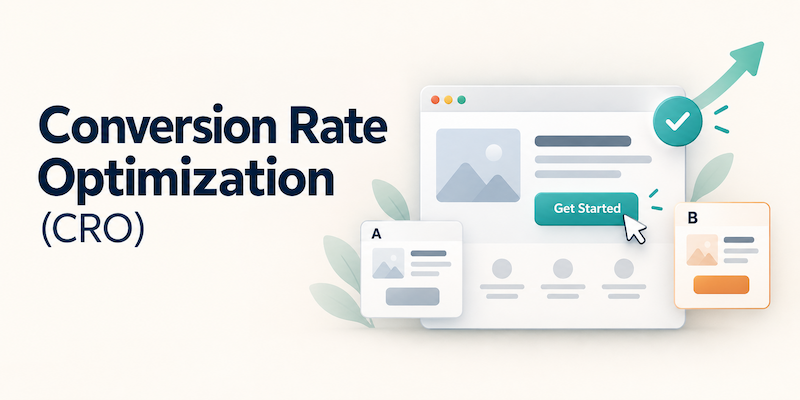
A/B testing is a popular method used in CRO.
It involves comparing two versions of a webpage or website element to determine which version performs better.
For example, a business may test two different headlines on a landing page. Some visitors see the first headline, while others see the second one.
The results can then show which version encourages more visitors to take action.
Businesses can test different elements, including:
- Headlines
- Buttons
- Images
- Forms
- Product descriptions
- Page layouts
- Special offers
A/B testing helps businesses make decisions based on real visitor behavior instead of assumptions.
CRO Helps Businesses Understand Their Visitors
Conversion Rate Optimization is not only about increasing sales or leads. It also helps businesses better understand their audience.
By studying visitor behavior, businesses can discover where users experience problems or lose interest.
For example, if many visitors leave during the checkout process, the process may be too complicated. If users start filling out a form but do not submit it, the form may be too long or require unnecessary information.
Identifying these problems gives businesses an opportunity to improve the customer experience.
CRO Is an Ongoing Process
Conversion Rate Optimization is not something that should be done only once.
Customer behavior can change over time. New technology, changing expectations, and competition can all affect how visitors interact with a website.
For this reason, businesses should regularly review their website performance and look for opportunities to improve.
Testing small changes and measuring the results can help businesses make better decisions over time.
Final Thoughts
Conversion Rate Optimization (CRO) is the process of improving a website to encourage more visitors to take valuable actions.
Whether the goal is to increase sales, generate leads, receive inquiries, or gain more subscribers, CRO can help businesses get better results from their existing website traffic.
By improving the user experience, website speed, content, trust, and calls to action, businesses can make their websites more effective.
Attracting visitors is important, but helping those visitors take the next step is what turns website traffic into real business results.